
A Safe Haven – The Complete Guide to Crate Training Your Teacup Puppy with Confidence and Compassion
Transform your puppy’s crate from a confinement tool into a sanctuary of security, comfort, and positive association.
Introduction: The Crate as a Sanctuary
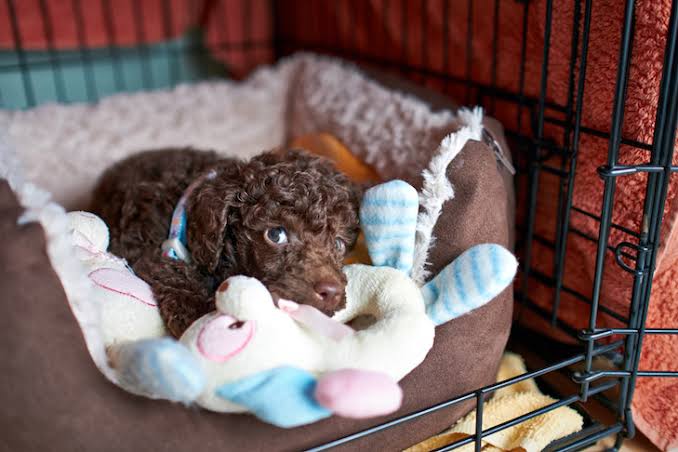
Master crate training for your teacup puppy with this comprehensive guide. Learn crate selection, positive introduction, schedules, troubleshooting, and transition tips. A crate stands in the corner of the living room—a wire structure or a soft-sided haven, seemingly simple in its design. For the uninitiated, it may appear as a cage, a form of confinement that evokes discomfort. Yet, when introduced correctly, the crate becomes something entirely different: a sanctuary, a den, a place of profound security for your teacup puppy.
Dogs are den animals by nature. Their ancestors sought out enclosed, protected spaces for rest and safety. A well-introduced crate taps into this instinct, providing your puppy with a private retreat where they can rest undisturbed, decompress from overstimulation, and feel secure in their own space. Far from being a punishment, the crate is a gift—a tool that facilitates housetraining, prevents destructive behaviours, and provides peace of mind for both you and your puppy.
Crate training a teacup puppy presents unique considerations. Their diminutive size, rapid metabolism, and developmental needs require adaptations to the standard approach. This comprehensive guide will walk you through every step of the process, ensuring that you and your puppy share a positive, successful crate training experience.
Chapter 1: Why Crate Training Matters
The benefits of crate training extend far beyond convenience. A properly crate-trained dog is a safer, more adaptable, and more confident companion.
Housetraining Acceleration:
Dogs are naturally disinclined to soil their sleeping quarters. When appropriately sized, a crate leverages this instinct, teaching your puppy to hold their bladder and bowels between scheduled outings. This is particularly valuable for teacup breeds, whose small bladders require frequent trips outside.
Prevention of Destructive Behaviour:
When left unsupervised, puppies may chew furniture, ingest inappropriate objects, or engage in other destructive activities. A crate provides a safe, puppy-proof environment during these periods, protecting both your home and your puppy’s health.
Travel and Veterinary Visits:
A crate-trained dog travels with greater ease and less stress. Veterinary visits, grooming appointments, and car journeys become manageable experiences when your puppy regards the crate as a familiar, reassuring space.
Injury Prevention:
Teacup puppies are particularly vulnerable to injury. A crate prevents falls from heights, accidental trampling by larger pets, and access to hazardous household items during unsupervised periods.
Rest and Recovery:
Puppies require substantial sleep—up to 18 to 20 hours per day. A crate provides a quiet, dimly lit environment where your puppy can rest without interruption, essential for healthy development.
Chapter 2: Selecting the Right Crate
Choosing the appropriate crate for your teacup puppy requires careful consideration of size, material, and design.
Size Considerations:
The crate should be large enough for your puppy to stand up, turn around, and lie down comfortably, but not so large that they can eliminate in one corner and sleep in another. For a teacup breed, a crate measuring approximately 18 to 24 inches in length is typically appropriate. Adjustable crates with dividers allow you to expand the interior space as your puppy grows.
Material Options:
-
Wire Crates: These provide excellent ventilation, visibility, and access. They are durable, easy to clean, and often collapsible for storage. Choose a model with a removable tray for simplified cleaning. Wire crates are an excellent choice for teacup breeds due to their lightweight construction and visibility.
-
Plastic Crates: Often used for airline travel, these crates offer greater privacy and a more den-like feel. They are durable and retain heat well, though they may offer less ventilation. They are excellent for travel and transport.
-
Soft-Sided Crates: Lightweight and portable, these crates are suitable for well-trained dogs but may be less durable for puppies prone to chewing or scratching. They offer a cozy, den-like environment and are excellent for travel.
Security Features:
Ensure the crate has secure latches that your puppy cannot manipulate. Wire crates should have smooth, rounded edges to prevent injury. If using a soft-sided crate, ensure the zippers are robust and the seams are reinforced.
Comfort Accessories:
A comfortable bed, soft bedding, and a crate cover (or blanket) contribute to your puppy’s sense of security. Provide materials that are washable, non-toxic, and safe for puppies.
Chapter 3: Location and Setup
The placement of your puppy’s crate significantly influences their comfort and willingness to use it.
A Central, Social Location:
Place the crate in a room where your family spends a significant amount of time—ideally the living room, family room, or kitchen. This allows your puppy to feel included in daily activities while learning that the crate is a positive, social space.
Avoid Drafts and Extremes:
Position the crate away from direct sunlight, drafts, and heating or cooling vents. Teacup puppies are sensitive to temperature extremes, and comfort is essential to their willingness to use the crate.
Nighttime Placement:
During the initial weeks of crate training, place the crate in your bedroom or within earshot. This reassures your puppy that you are nearby, reducing anxiety and facilitating nighttime potty breaks.
Neighboring Considerations:
If you live in an apartment or have close neighbours, consider placing the crate on a soft surface (e.g., a thick rug or mat) to reduce noise transmission.
Chapter 4: The Introduction – Creating Positive Associations
The introduction to the crate is the foundation upon which all subsequent training rests. This phase should be gradual, positive, and free of coercion.
Step 1: Familiarization Without Pressure
Leave the crate door open and allow your puppy to explore the crate at their own pace. Place treats, toys, or a familiar blanket inside to encourage curiosity. Allow them to enter and exit freely without closing the door.
Step 2: Feeding in the Crate
Begin feeding your puppy their meals inside the crate. Place the food bowl at the back of the crate, encouraging them to enter fully. Leave the door open initially, gradually working toward closing the door as they eat and opening it immediately after they finish.
Step 3: Treat Throws
Toss high-value treats or a favorite toy into the crate, encouraging your puppy to retrieve them. This builds a pattern of positive reinforcement.
Step 4: Crate Games
Engage in short, playful sessions where you place a treat inside the crate, close the door, and then release your puppy to retrieve it. Gradually increase the duration of the door-closed period.
Step 5: Calm Capture
When your puppy voluntarily enters the crate and settles, reward them with calm praise and a treat. This reinforces the behaviour without creating excitement that prevents relaxation.
The Critical Principle:
Never force your puppy into the crate. Coercion creates negative associations that are difficult to overcome. Patience and positive reinforcement are your most powerful tools.
Chapter 5: Duration – Building Tolerance Gradually
The length of time your puppy spends in the crate should increase incrementally based on their age and bladder capacity.
General Guidelines for Teacup Puppies:
-
2 to 3 months: Maximum crate time of 1 to 2 hours during the day; 3 to 4 hours at night.
-
3 to 4 months: Maximum crate time of 2 to 3 hours during the day; 4 to 5 hours at night.
-
4 to 6 months: Maximum crate time of 3 to 4 hours during the day; 5 to 6 hours at night.
-
6 months and older: Maximum crate time of 4 to 5 hours during the day; 6 to 8 hours at night.
The 1-Hour per Month Rule:
A common guideline suggests that a puppy can hold their bladder for approximately one hour for every month of age, up to a maximum of 6 to 8 hours for adult dogs. Teacup breeds may have slightly shorter bladder capacity.
Signs Your Puppy Needs a Break:
Whining, barking, scratching at the crate door, or pacing are indicators that your puppy needs a bathroom break. Respond promptly to these signals to prevent accidents and maintain positive associations with the crate.
Chapter 6: The Nighttime Routine
Establishing a consistent nighttime routine supports successful crate training and reduces nocturnal anxiety.
Pre-Bedtime Preparation:
-
Ensure your puppy has had adequate exercise during the day.
-
Provide a final bathroom break immediately before crate time.
-
Allow your puppy to settle outside the crate with quiet activities before crate entry.
Bedtime Crate Entry:
Place your puppy in the crate with a comforting item (a blanket with their littermates’ scent or a snuggle puppy with a heartbeat simulator). Say a calm phrase such as “bedtime” or “crate” to establish a cue. Cover the crate partially to create a den-like environment.
Responding to Nighttime Vocalization:
If your puppy whines or barks, assess the cause. They may need a bathroom break. If they eliminate successfully, place them back in the crate promptly. If they are vocalizing without a need for elimination, you can provide brief verbal reassurance (e.g., “quiet” or “settle”) but avoid excessive attention or removing them from the crate.
Managing Crying at Night:
The first few nights may involve some vocalization. Many experts recommend placing the crate in your bedroom for the initial period, allowing you to comfort your puppy with your presence. Gradually move the crate to its intended location as your puppy becomes comfortable.
Chapter 7: Housetraining Integration
The crate is a powerful housetraining aid, but it is most effective when integrated with a structured schedule.
The Foundation: A Consistent Schedule
Regular feeding times, water availability, and bathroom breaks are essential. Teacup puppies typically need to eliminate approximately 15 to 30 minutes after eating or drinking.
Crate-Schedule Integration:
-
Upon waking your puppy, take them immediately to their designated potty area.
-
After a successful elimination, provide praise and a treat.
-
After a play session, take them for a bathroom break.
-
When not actively supervised, return your puppy to the crate.
Preventing Confusion:
If your puppy has an accident in the crate, do not punish them. Clean the area thoroughly with an enzymatic cleaner to remove odor and prevent recurrence. Assess whether the crate size is appropriate and whether your potty schedule is adequately frequent.
Potty Breaks at Night:
For young puppies, a middle-of-the-night bathroom break is often necessary. Set a quiet, calm schedule—typically 3 to 4 hours after their last evening break. Gradually extend this interval as your puppy’s bladder capacity increases.
Chapter 8: Troubleshooting Common Challenges
Even with optimal training, challenges may arise. These solutions address the most common concerns.
Whining and Vocalization
-
Assess if your puppy needs a bathroom break.
-
Provide a chew toy or puzzle to occupy their attention.
-
Ignore attention-seeking barking; reward silence.
-
Consider a white noise machine or calming music to mask environmental sounds.
Reluctance to Enter
-
Assess the crate for any uncomfortable factors (draft, heat, hard surface).
-
Enhance the crate’s desirability with high-value treats.
-
Slow the introduction process; focus on games and feeding in the crate.
Soiling the Crate
-
Evaluate the crate size; the space should be restricted.
-
Increase bathroom break frequency.
-
Clean the crate thoroughly with enzymatic cleaner.
-
Rule out a urinary tract infection with your veterinarian.
Separation Anxiety
-
Gradually increase the duration of crate confinement.
-
Provide engaging puzzle toys to occupy the mind.
-
Create a calm, predictable departure and arrival routine.
-
Consult a professional behaviourist for persistent issues.
Chewing the Crate
-
Provide appropriate chew toys to redirect the behaviour.
-
Ensure your puppy has sufficient mental and physical exercise.
-
Apply a taste deterrent (safety-tested for dogs) to the crate surfaces.
Chapter 9: The Transition to Free Roaming
Crate training is not a lifelong confinement. As your puppy matures, you can gradually transition them to greater freedom.
Signs of Readiness:
-
Reliable housetraining with minimal or no accidents.
-
Non-destructive behaviour during supervised outings.
-
Appropriate chewing habits (focus on appropriate items).
-
Calm demeanour when left alone in confined spaces.
The Gradual Transition:
-
Begin with brief (10-15 minutes) periods of freedom.
-
Gradually extend the duration over several weeks.
-
Introduce freedom to one room at a time.
-
Maintain crate access for rest periods and when you are away.
Maintaining Crate Use:
Even after your dog has earned free roaming privileges, maintain the crate as a familiar, comfortable space. Many adult dogs continue to use their crates as sleeping areas or retreats. Continue to offer crate time during travel or when your home is unusually busy.
Chapter 10: The Pure Path Pups Approach to Crate Training
At Pure Path Pups, we introduce our puppies to crates from the earliest days of their development.
Early Familiarization:
Our puppies are introduced to a crate environment from 4 weeks of age. We leave crate doors open, allowing puppies to explore and rest inside at will. This early exposure builds positive associations.
Positive Reinforcement in the Nursery:
We feed meals in crates, toss treats inside, and encourage voluntary entry. By the time a Pure Path Pup transitions to their forever home, they are already familiar with the crate concept.
Travel Preparation:
We incorporate crate time into our daily routine, helping puppies understand that the crate is a safe, pleasant place for rest and comfort. This preparation facilitates the transition to new homes.
Owner Education:
We provide detailed guidance on crate training to all adopting families, including step-by-step instructions and personalized advice based on your puppy’s temperament and experience.
Conclusion: A Gift of Confidence and Security
Crate training is an investment in your teacup puppy’s wellbeing. When approached with patience, compassion, and consistency, the crate becomes a gift—a sanctuary, a tool for housetraining, and a source of lifelong security. Your puppy will learn to regard their crate not as a confinement, but as a retreat, a place where they can rest, relax, and feel safe in their own space.
At Pure Path Pups, we have already begun this journey for you. We introduce our puppies to crates from an early age, establishing the foundation for a smooth transition to your home. Together, we can ensure that your teacup companion grows into a confident, well-adjusted adult dog—one who knows that their crate is a place of safety and love.